Market statistics
- Total volume
- $2.3M
- 24h volume
- $230K
- Liquidity
- $2.3M
- Open interest
- $236K
- Comments
- 30
Available prediction outcomes (80)
Sorted by descending live probability. Click any outcome to trade it on PolyGram.
Market context
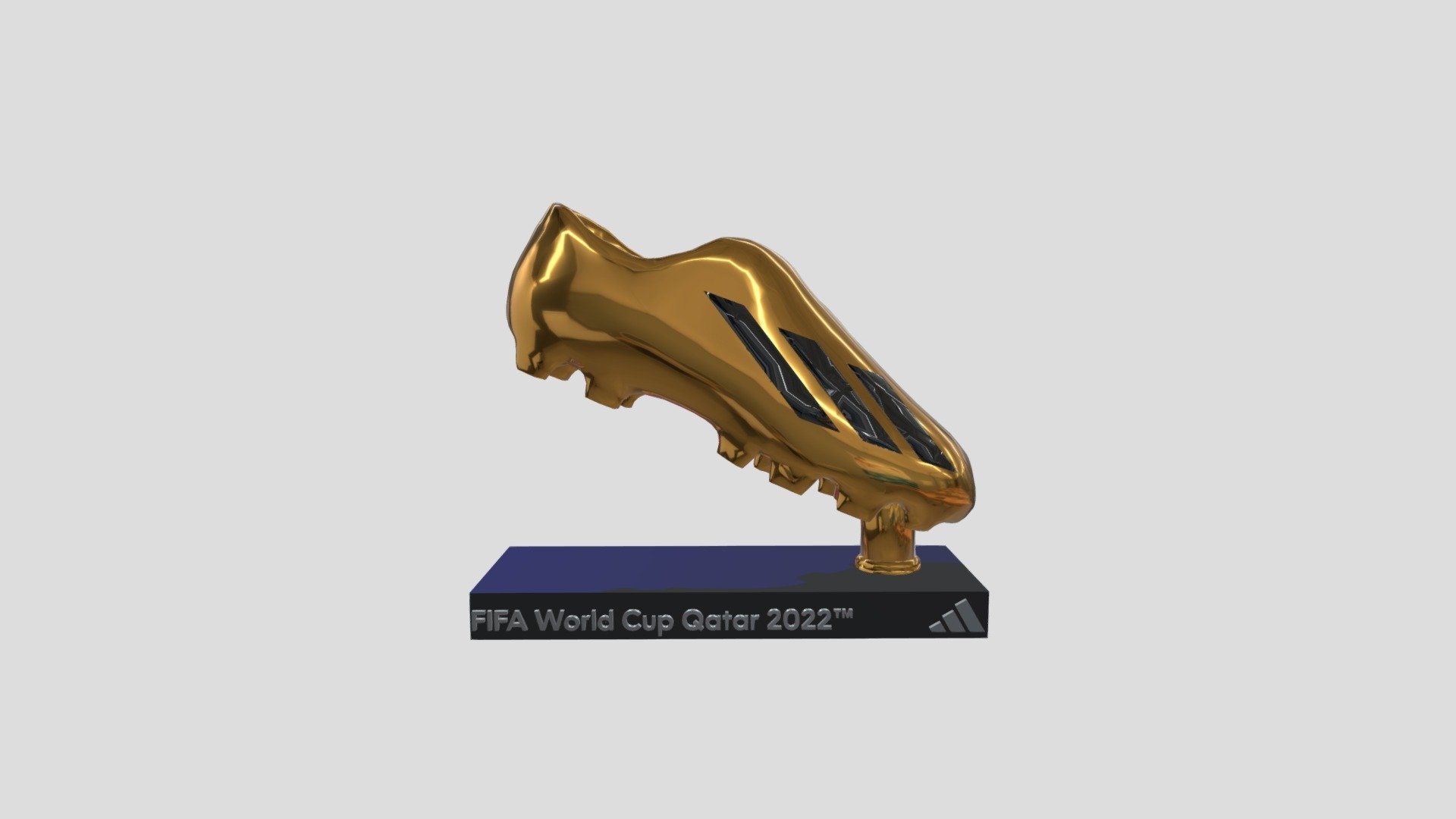
The 2026 FIFA World Cup will be hosted across the United States, Mexico, and Canada, featuring 48 teams competing for the Golden Boot—awarded to the tournament's leading goalscorer. The current prediction-market probability of 5% for any single player reflects the dispersed nature of top-scorer betting, where favourite odds typically range between 8–12% across major sportsbooks for the consensus frontrunners. This 5% reading sits below the implied probability for most individual favourites at established betting operators, suggesting either wider uncertainty in the prediction market or a concentration of backing towards a smaller subset of candidates than traditional markets reflect.
Historical precedent shows that World Cup Golden Boot winners emerge unpredictably from tournament dynamics rather than pre-tournament ranking. Of the past four tournaments, only one favourite (Thomas Müller in 2014, though he finished third) came close to pre-event consensus; others were driven by team success and tactical deployment. The 2022 winner, Kylian Mbappé, was heavily favoured beforehand, yet France's deep run proved decisive. Prediction markets typically underweight the role of knockout-stage progression and penalty-kick variance, both of which shape final tallies substantially.
Traders should monitor squad announcements and injury updates through early 2026, particularly for established strikers from qualifying nations. Fixture scheduling—released in late 2025—will clarify group-stage difficulty and potential goal-scoring opportunities. Recent reporting from ESPN and Sky Sports has highlighted emerging talents in South American qualifying, though European frontrunners retain structural advantages in expected minutes and team support. The settlement rule's penalty-kick tiebreaker adds a secondary layer of variance absent from standard sportsbook offerings.
Wikipedia Context
-
 World cup
A world cup is a global sporting competition in which the participant entities – usually international teams or individuals representing their countries – compete for the title of world champion. The event most associated with the name is the FIFA World Cup for association football, which dates back to 1930. Since then there have been a number of sporting ev
-
2016 World Cup of Hockey
The 2016 World Cup of Hockey was an international ice hockey tournament. It was the third installment of the National Hockey League (NHL)-sanctioned competition, 12 years after the second World Cup of Hockey in 2004. It was held from September 17 to September 29 at Air Canada Centre in Toronto, Ontario. Canada won the championship, defeating Team Europe in t
-
1996 World Cup of Hockey
The first World Cup of Hockey (WCH), or the 1996 World Cup of Hockey, was the inaugural edition of the event, replacing the Canada Cup as one of the world championships of ice hockey.
-
2028 World Cup of Hockey
The 2028 World Cup of Hockey will be the fourth installment of the World Cup of Hockey by the National Hockey League. It will be played in February 2028 with 17 games in three host cities. The competition will include eight teams from individual countries in North America and Europe.
Methodology
Methodologically we separate two layers: the live probability (Polymarket mid-price) and the platform attributes (fee, KYC, settlement currency, payment rails). That keeps the comparison honest — a single canonical probability across the row, with the venue-by-venue trade-offs spelt out in the columns next to it.
Resolution & payout
Settlement runs on-chain. Polymarket's contract logic separates YES and NO shares as conditional tokens; at resolution the winning share lifts to $1.00 and the losing one to $0. The outcome input comes from the UMA Optimistic Oracle, which secures against bad resolution with a bond + dispute window.
Once finalised, the smart contract pays USDC to the holders' wallets within minutes — no withdrawal fees beyond Polygon network gas. Kalshi settles in USD via CFTC clearance, Betfair in account currency net of commission, Manifold in play-money mana with no cash-out.
FAQ
- Where can I trade this market with the lowest fees?
- Polymarket is geo-blocked in the US/UK/EU. The easiest 0%-fee broker into the same order book is PolyGram. Kalshi charges up to 7% per trade; Betfair Exchange takes 2-5% commission on net winnings.
- Is this market available outside the US?
- Polymarket itself is geo-blocked in the US/UK/EU. Always check the legal status of prediction markets in your jurisdiction before trading.
- How does resolution work?
- Through the UMA Optimistic Oracle on Polygon: a proposer submits the outcome, a two-hour challenge window opens, and USDC payouts settle automatically once the result is final.
- What's the difference between YES and NO shares?
- A YES share pays $1.00 if the event happens, $0 otherwise. A NO share pays $1.00 if the event doesn't happen. The market price between 0¢ and 100¢ is the implied probability.
- How fast are USDC deposits?
- Polygon credits deposits after 12 confirmations — usually under 30 seconds. Withdrawals follow the same path and land back in your wallet within minutes.
Trade World Cup: Golden Boot Winner on PolyGram
Live order book, 0% fees, USDC settlement in seconds.
Open live market →