Market statistics
- Total volume
- $608K
- 24h volume
- $364K
- Liquidity
- $9K
- Open interest
- $3K
- Comments
- 3
Available prediction outcomes (19)
Sorted by descending live probability. Click any outcome to trade it on PolyGram.
Market context
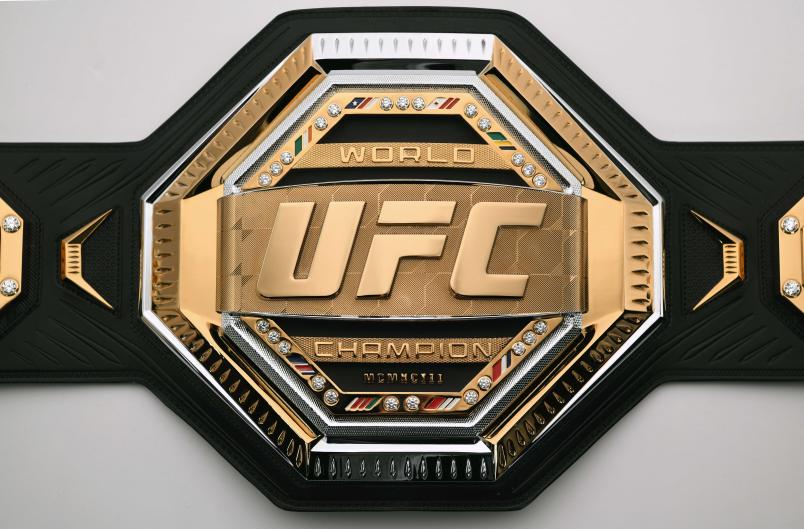
The UFC welterweight division will have crowned a champion by year-end 2026, with that individual retaining the official title through 31 December. The current 1% implied probability reflects extreme confidence that the incumbent champion—currently Belal Muhammad, who claimed the belt in November 2024—will either lose the title or the division will face an extended vacancy before the settlement date.
Historical precedent suggests welterweight title reigns typically span 12–24 months, with champions defending 2–4 times annually. Colby Covington, Jorge Masvidal, and Tyron Woodley all held the belt for extended periods without vacating through injury or retirement. A 1% probability implies traders expect either an unprecedented turnover rate (multiple title changes within two years) or a structural breakdown in the division's championship structure. Comparable low-probability outcomes in other weight classes have occasionally resolved to "Other" when injuries or contractual disputes created vacancies near settlement windows.
Key catalysts include the UFC's 2025–2026 title-defence schedule, which will determine whether Muhammad faces sufficient challengers to retain the belt. Recent reporting from MMA Junkie and ESPN has highlighted the division's depth, with Leon Edwards, Shavkat Rakhmonov, and Kamaru Usman positioned as contenders. Any announcement of a title fight, injury to the champion, or unexpected retirement would materially shift probabilities. Traders should monitor official UFC fighter status updates and title-bout confirmations, as the division's competitive landscape could shift substantially over the 24-month window.
Methodology
Methodologically we separate two layers: the live probability (Polymarket mid-price) and the platform attributes (fee, KYC, settlement currency, payment rails). That keeps the comparison honest — a single canonical probability across the row, with the venue-by-venue trade-offs spelt out in the columns next to it.
Resolution & payout
Settlement runs on-chain. Polymarket's contract logic separates YES and NO shares as conditional tokens; at resolution the winning share lifts to $1.00 and the losing one to $0. The outcome input comes from the UMA Optimistic Oracle, which secures against bad resolution with a bond + dispute window.
Once finalised, the smart contract pays USDC to the holders' wallets within minutes — no withdrawal fees beyond Polygon network gas. Kalshi settles in USD via CFTC clearance, Betfair in account currency net of commission, Manifold in play-money mana with no cash-out.
FAQ
- Is this market available outside the US?
- Polymarket itself is geo-blocked in the US/UK/EU. Always check the legal status of prediction markets in your jurisdiction before trading.
- What's the difference between YES and NO shares?
- A YES share pays $1.00 if the event happens, $0 otherwise. A NO share pays $1.00 if the event doesn't happen. The market price between 0¢ and 100¢ is the implied probability.
- What does Polymarket cost to trade?
- Polymarket itself charges 0% — the only cost is the Polygon network fee, typically under $0.01 per transaction. Off-chain venues like Kalshi or Betfair charge 2-7% commission.
- How fast are USDC deposits?
- Polygon credits deposits after 12 confirmations — usually under 30 seconds. Withdrawals follow the same path and land back in your wallet within minutes.
- How reliable are the quoted odds?
- The YES/NO percentages are the live mid-prices of the Polymarket order book. On deep markets they move every few seconds; on thinner ones you'll see short plateaus.
Trade Who will be UFC Welterweight champion at the end of … on PolyGram
Live order book, 0% fees, USDC settlement in seconds.
Open live market →